Events Behavior 2026: The New Rules of Event Marketing- Starcom Romania Study
06 Jul 2026
 Search


 All Publicis Groupe Romania proprietary data tools in one place.


Consumer attention is increasingly fragmented, while opportunities for genuine engagement have become harder to create. People skip ads, ignore promotional messages, and spend their time across countless digital platforms. The question for brands is no longer how to be seen, but how to become part of experiences that people genuinely value.
This is why live events deserve a different place in today’s marketing mix. According to the latest Events Behavior 2026 – Starcom Romania study, events are no longer just communication channels or sponsorship opportunities. They have become spaces where people actively choose to spend their time, giving brands a rare chance to create genuine connections rather than simply generate visibility.
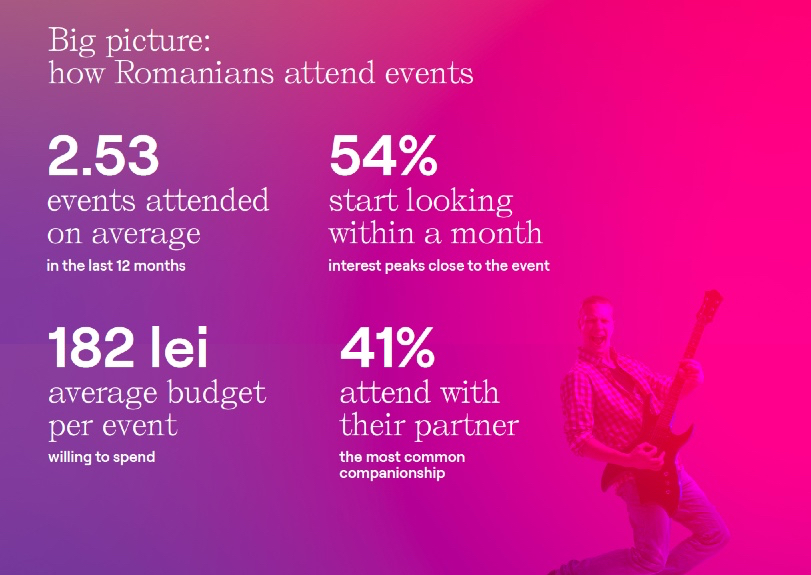
Despite ongoing economic pressure, live events continue to attract audiences. The results show that over 82% of Romanians have attended at least one event in the past 12 months, attending, on average, about two to three events per person.
As the Starcom Romania research team highlights, “Events are no longer just spaces for brand exposure. They have become environments where people choose to spend their time, discover new things, and create lasting memories. In this context, relevance and usefulness matter far more than simply being present or visible.”
Relaxation remains the strongest motivation, closely followed by the desire to discover something new and experience a unique atmosphere. In other words, people are not simply purchasing tickets; they are investing in moments that break routine and create memories.
At the same time, the biggest barriers are practical rather than emotional. Cost remains the primary obstacle, followed by time constraints and accessibility. This suggests that demand for live experiences is healthy, but consumers have become more selective about where they invest both their time and money.
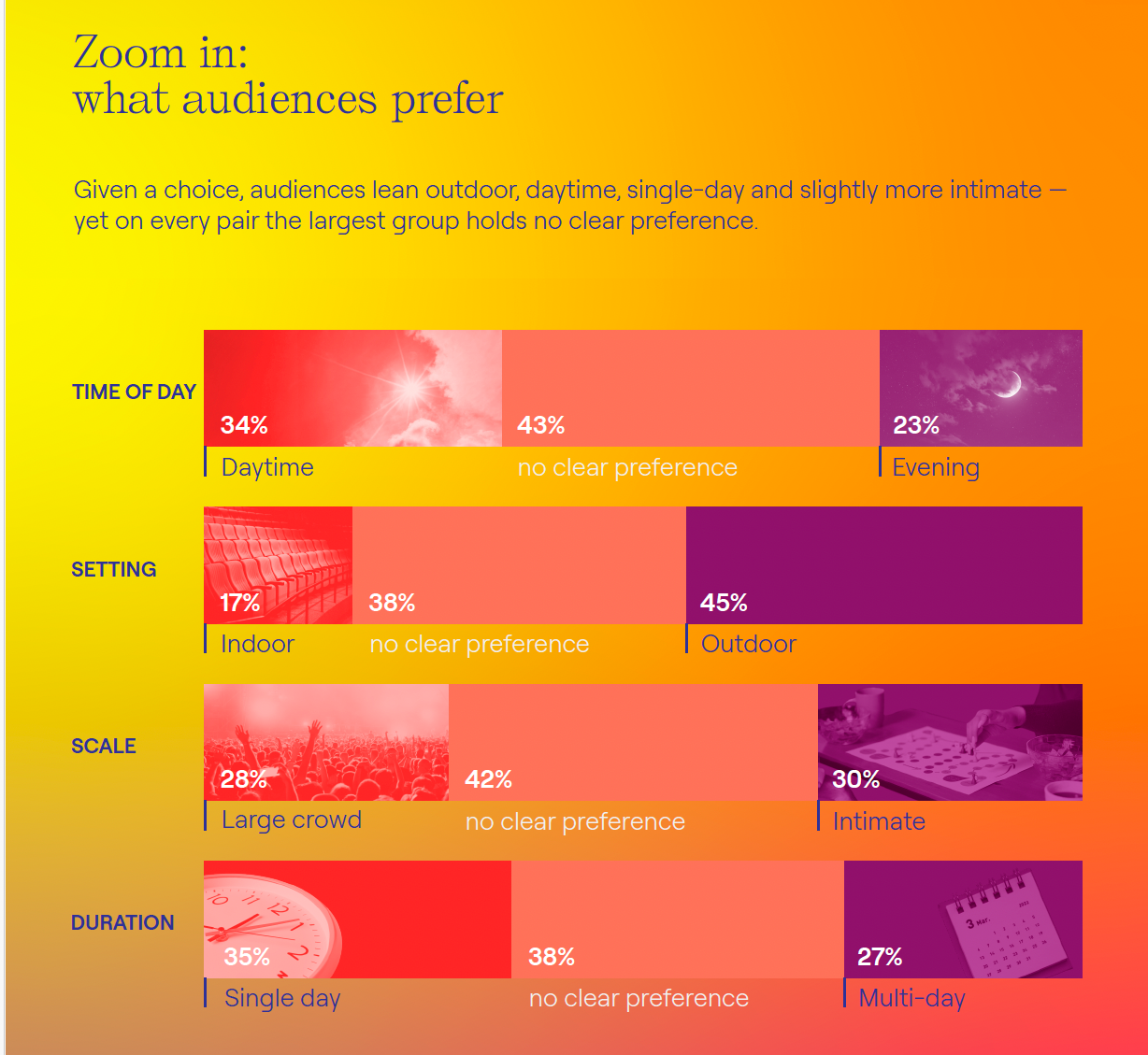
One of the study’s most compelling findings challenges a common assumption: consumers are often described as becoming increasingly resistant to advertising. Yet when it comes to events, almost three quarters of respondents say they are open to brands being present.
The implication is important. People haven’t become resistant to brands, they’ve become selective about the value brands bring to their experiences.
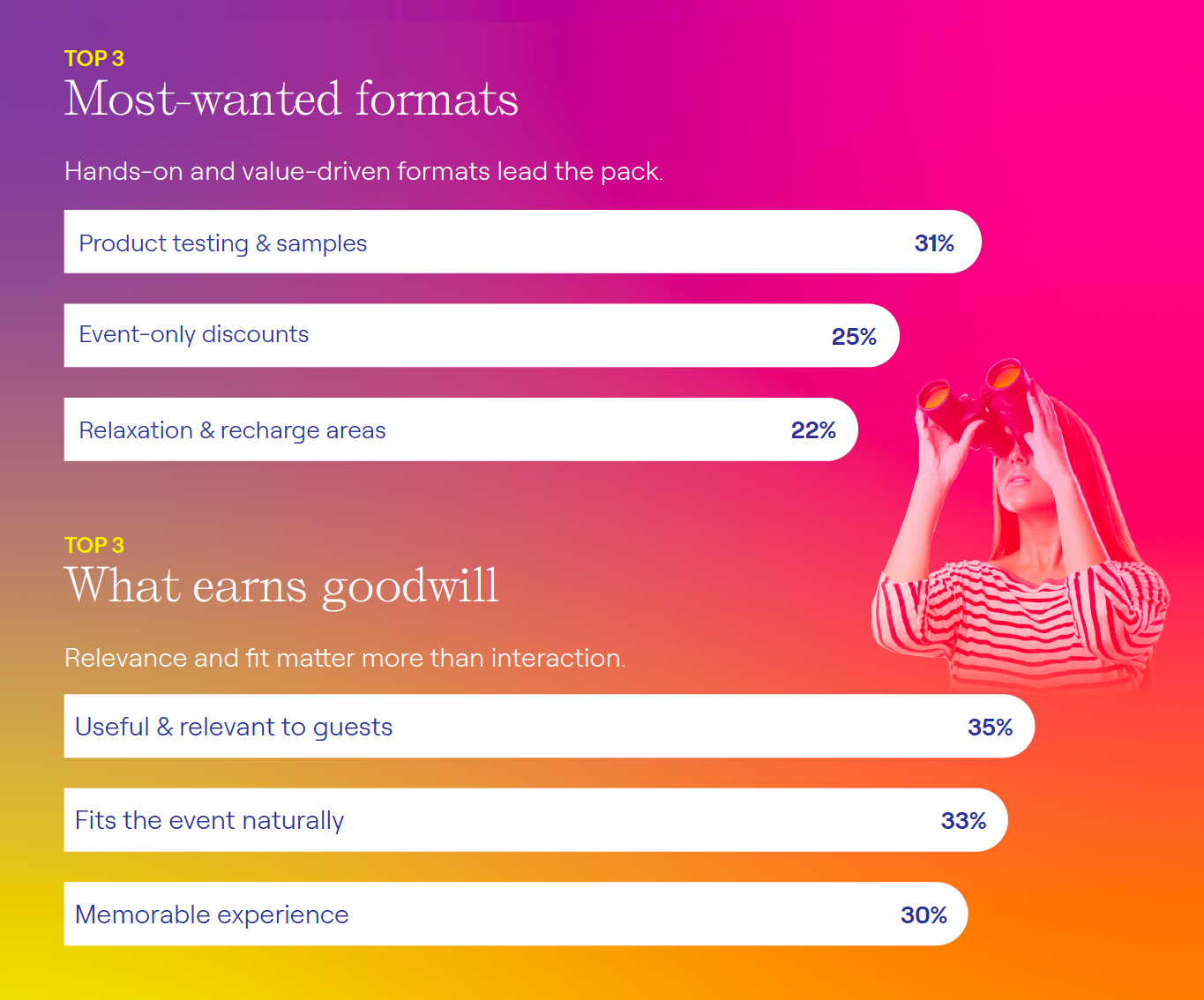
Brands that naturally fit the event, contribute something useful and enhance the overall experience generate significantly stronger goodwill than those focused primarily on exposure.
For marketers, this represents a shift in mindset – success is no longer measured by whether a logo is seen, but by whether the brand meaningfully improves the participant’s experience.
The activations audiences value most reinforce this shift: product sampling, exclusive event offers and practical amenities such as recharge or relaxation areas all rank higher than purely promotional executions.
While these activations differ in format, they share a common characteristic – they solve a need, remove friction or add genuine value.
The future of experiential marketing isn’t about creating bigger brand moments. It’s about designing better participant experiences. Brands that make an event easier, more enjoyable or more memorable are the ones people are most likely to remember afterwards.
Timing matters more than ever. The study also reveals that event decisions happen surprisingly late: more than half of attendees begin looking for information less than a month before an event, indicating that interest peaks much closer to the attendance decision than many communication plans assume.
Equally revealing is the role of personal recommendation. Word of mouth remains the leading discovery mechanism, reminding marketers that the quality of the experience itself often becomes the most effective media channel.
From sponsorship to relationships – perhaps the most significant takeaway from the research is that events occupy a unique position in today’s customer journey.
Unlike many digital touch-points, they bring together attention, emotion, social interaction and physical experience in the same moment. That combination creates conditions where consumers are not simply exposed to brands, they are willing to interact with them.
Events Behavior 2026 explores event attendance, perceptions of brand presence, awareness and interest in 120 events planned for 2026, and music preferences, including profiles of over 170 Romanian artists across 10 genres. Additional insights are available upon request (consumer@starcomww.com), covering event trends (2021–2026), interests across cultural, sports, and music events, and demographic comparisons.


Methodology
The “Events Behavior Study 2026” was conducted by the agency Starcom Romania between June 09-16, 2026, on a sample of 1012 respondents, using the CAWI (Computer Assisted Web Interviews) method. The study is part of the HumanGraph Experience series, a research tool for analyzing and understanding human behavior in different contexts, focused on collecting and visualizing relevant data.
All Publicis Groupe Romania proprietary data tools in one place.