Decoding the Romanian shopper: attitudes, habits & emerging trends – Starcom Study
04 Jun 2026
 Search


 All Publicis Groupe Romania proprietary data tools in one place.


Let’s be honest – most brand strategies in FMCG are built on assumptions that are quietly becoming outdated: price wins in a downturn, digital is replacing everything, private labels are the cheap option.
“Beyond the classic indicators of price or affordability, we are seeing a clear maturation in consumer behavior: Romanians no longer respond passively to marketing stimuli, but actively filter information and build value based on their own criteria. For brands, this means differentiation no longer comes from promises, but from proof – from the consistency between the message, the product, and the real experience delivered to consumers,” said Mirela Mirică, Media Research Specialist at Starcom Romania.
Yes, the Romanian consumer is under financial pressure. Over half say they frequently choose cheaper options to stay within their grocery budget. But here’s what you should pay attention to: 73% rank ingredient quality as their single most important purchase factor, and 69% are actively spending more time searching for quality rather than simply settling for less.
The dominant consumer archetype right now is the smart optimizer, someone who will switch brands, hunt for deals, and scan labels, but won’t accept products they don’t trust. Only 16% are pure price-chasers. The remaining 84% are weighing quality against price in every single transaction. If your brand’s messaging is all about affordability, you may be winning the wrong argument.
Across every dimension of this study, trust comes out as the dominant decision driver. Consider these signals together: most consumers remain loyal to their usual brands, many are concerned about additives and preservatives, health is a primary driver behind choosing quality products, and more than half verify information from multiple sources before making an online purchase.
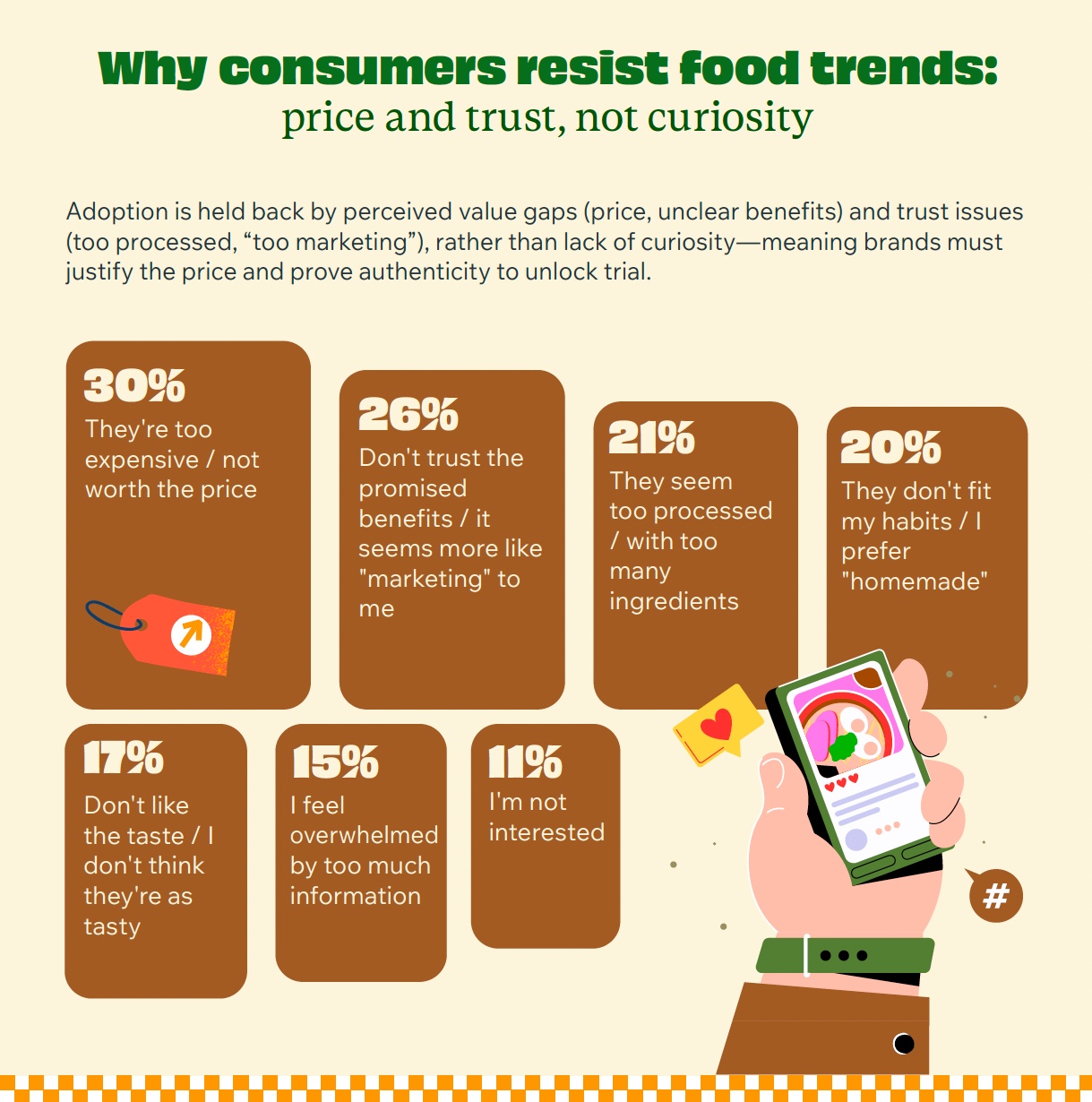
Romanian consumers are not impulsive: they are deliberate, skeptical, and increasingly resistant to claims that feel like “just marketing.” In fact, 26% cite distrust of promised benefits as a primary barrier to trying food trends, second only to price.
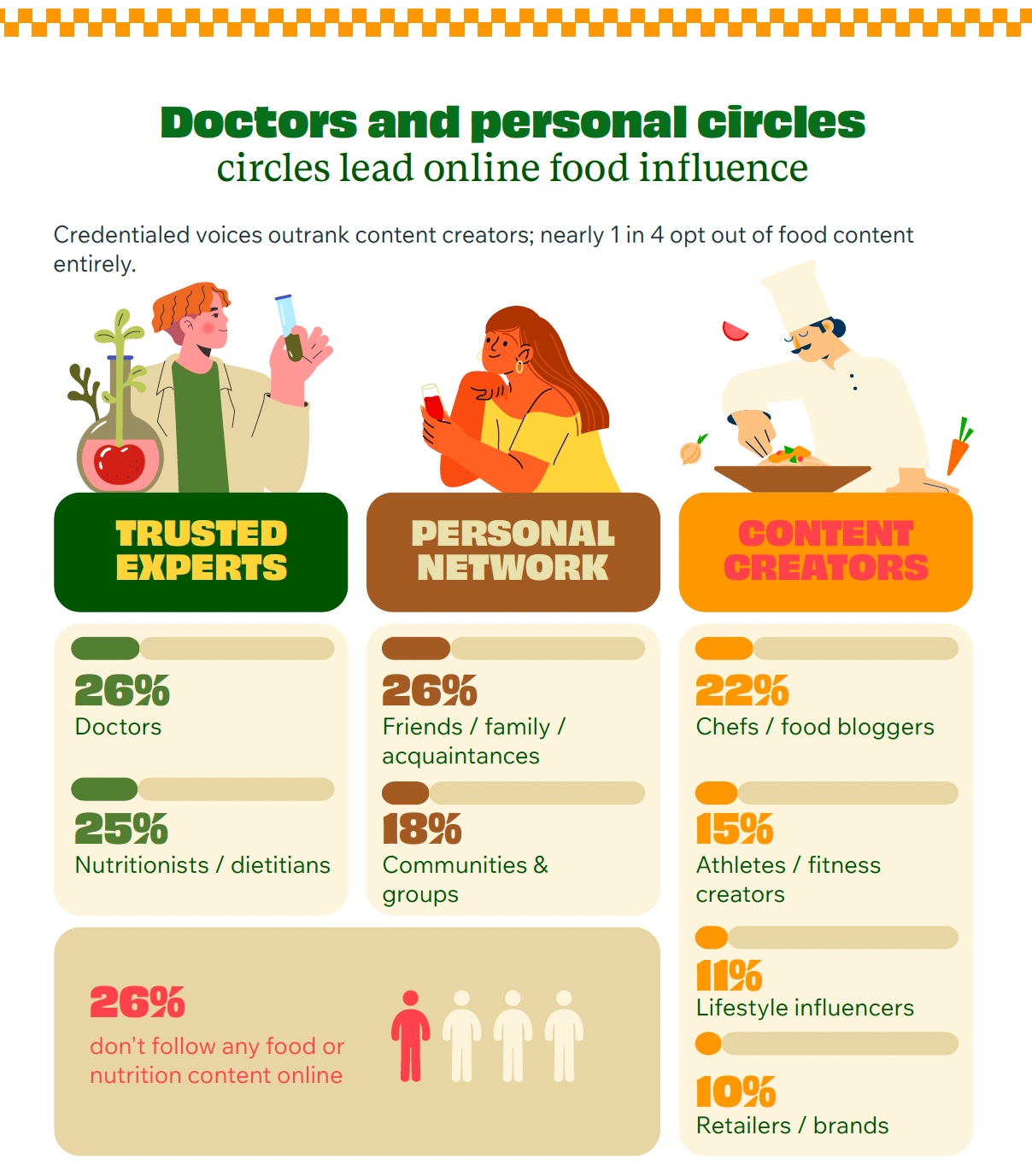
The trust equation has shifted. It used to be that brand heritage and advertising reach were enough to carry you. Today, trust is built through ingredient transparency, label clarity, and third-party credibility (doctors and nutritionists, by the way, remain the most trusted voices, dramatically outranking influencers).
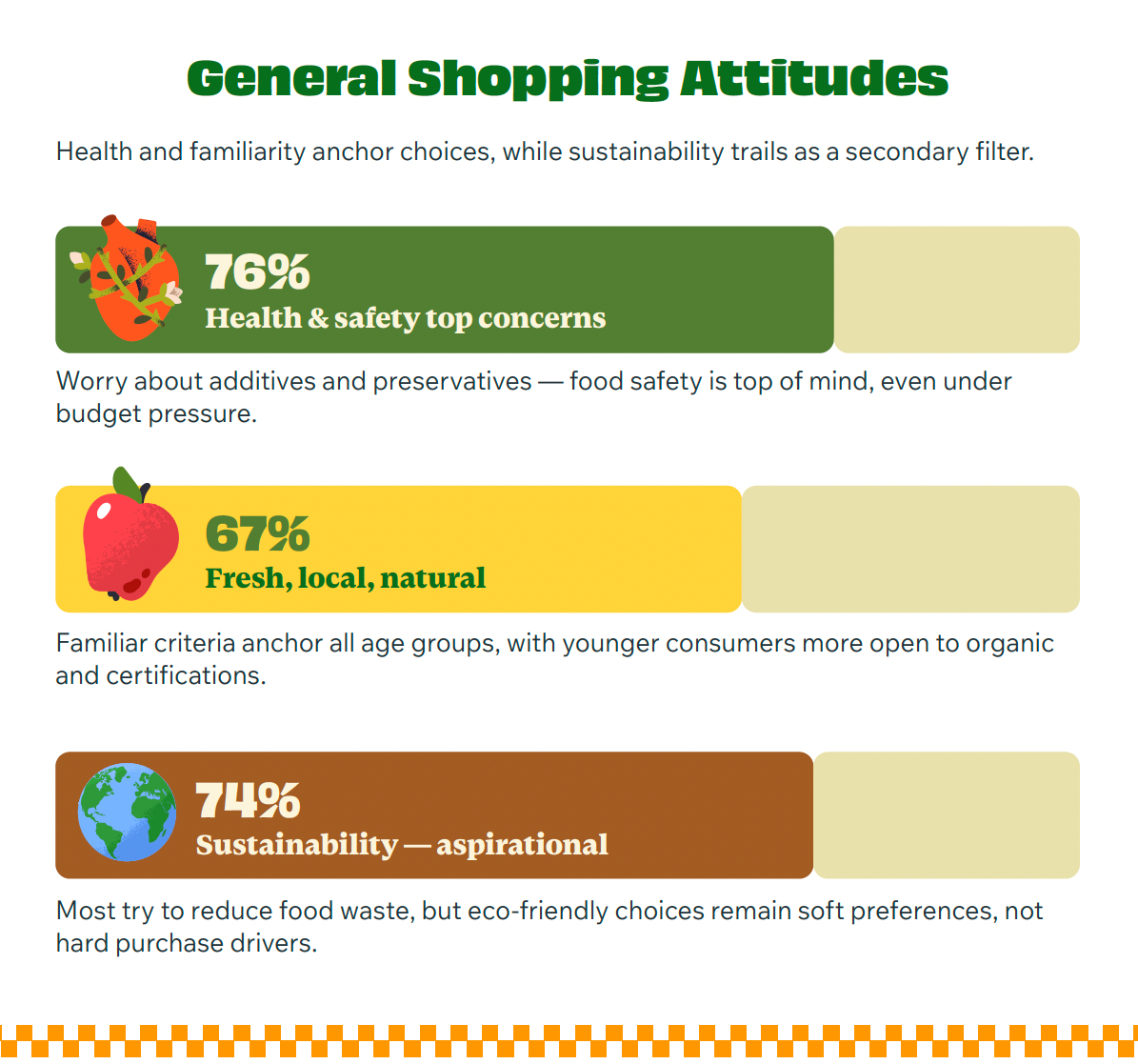
The data points in one direction: many consumers see little difference in quality between big brands and private labels, most mix both options across categories, and a growing number switch to private labels after personally confirming comparable quality through trial.
This isn’t a recession-era blip, but structural: the quality perception gap is narrowing, and with it, the emotional premium attached to branded products. Big brands still win on trust, familiarity, and the emotional reassurance of choosing something “you know.” But that advantage is eroding, especially for routine, low-stakes purchases.
The strategic implication is clear: you need to justify your premium beyond functional quality. What is your brand’s story? What does your brand stand for that a supermarket own-label cannot replicate?
There’s a persistent myth in marketing circles that digital has fundamentally transformed how consumers discover and choose products. The reality, at least for Romanian grocery shoppers, is more complicated.
Product labels remain the #1 source of nutrition information, followed by friends and family, specialized websites, and doctors. And nearly one in four consumers say online content has no influence on their food choices at all.
That said, digital isn’t irrelevant; it’s just different from what most brands expect. Among those it does reach, it drives real actions: a significant share of consumers searched for additional product details after seeing online content, many clicked through to a product or store page, and nearly a quarter purchased a product they initially discovered online.
The content that actually performs? Promotions, recipe content (tutorials and short video), and educational nutrition tips significantly outperform influencer recommendations, and paid social ads. Most consumers say they can easily recognize sponsored content, while only a minority trust creator recommendations.
This may be the most important insight for innovation-focused teams. Romanian consumers are aware of major food trends: from high-protein products and plant-based alternatives to free-from categories and ready meals, but awareness rarely translates into consistent behavior.
Many consumers have never tried any of these trends, plant-based alternatives remain absent from daily diets for a large share of shoppers, protein content is rarely a decisive purchase factor, and protein snacks have yet to become part of everyday routines.
The barriers are not driven by lack of curiosity, but by concerns around value and credibility. Consumers question whether these products are worth the price, doubt the authenticity of their claimed benefits, and often perceive them as overly processed. These are rational objections that require equally rational answers.
Protein is a particularly instructive case study: there is strong passive awareness, with most consumers getting their protein from eggs, chicken, and dairy rather than functional products. Taste remains a non-negotiable: 88% require that taste either matches or exceeds the nutritional benefit. And the motivation is primarily general wellness and healthy aging, not athletic performance.


Methodology
The study was conducted by the media agency Starcom Romania, in 6-11 May 2026, using the CAWI (Computer Assisted Interviews) method on a sample of 606, urban & rural, aged 18+ years old. The study is part of the HumanGraph Experience series, a research tool for analyzing and understanding human behavior in different contexts, focused on collecting and visualizing relevant data.
All Publicis Groupe Romania proprietary data tools in one place.