Two Weeks, No Solo Decisions: Kids Habits Study – Zenith Media Romania
21 Sep 2026
 Search


 All Publicis Groupe Romania proprietary data tools in one place.


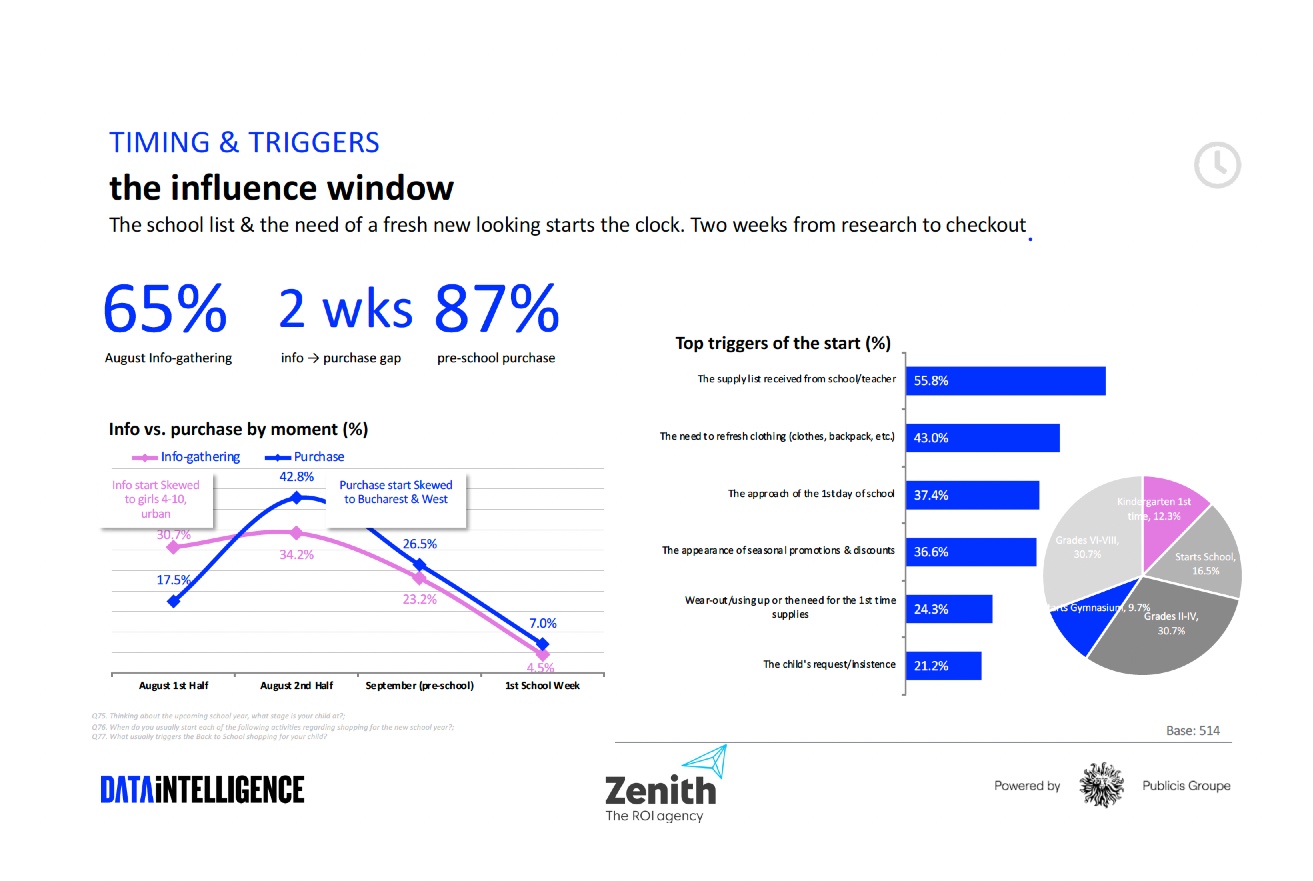
Back-to-school looks like a season on the calendar. In the data, it behaves like a sprint. The second edition of Kids Habits Study, performed by Zenith Media Romania, shows that the gap between “let’s look” and “let’s buy” is barely two weeks.
“The Kids Habits Back-to-School study debunks a cliché: far from being a moment of parental authority, back-to-school shopping is a family negotiation. Joint decision-making dominates every category, and the child’s voice is heard loudest where their identity is at stake.
One in four children chooses their school backpack or pencil case on their own, which is also where parents are least likely to decide unilaterally, followed closely by clothing and footwear. At the opposite end, when it comes to books, courses, or educational subscriptions/apps, the parent remains the decision-maker. And autonomy grows visibly with age: among 11–14-year-olds, the share of children who decide on their own doubles or even triples compared to preschoolers, depending on the category,” added Cosmin Ciubotaru, Consumer Insights Strategist, Zenith Media.
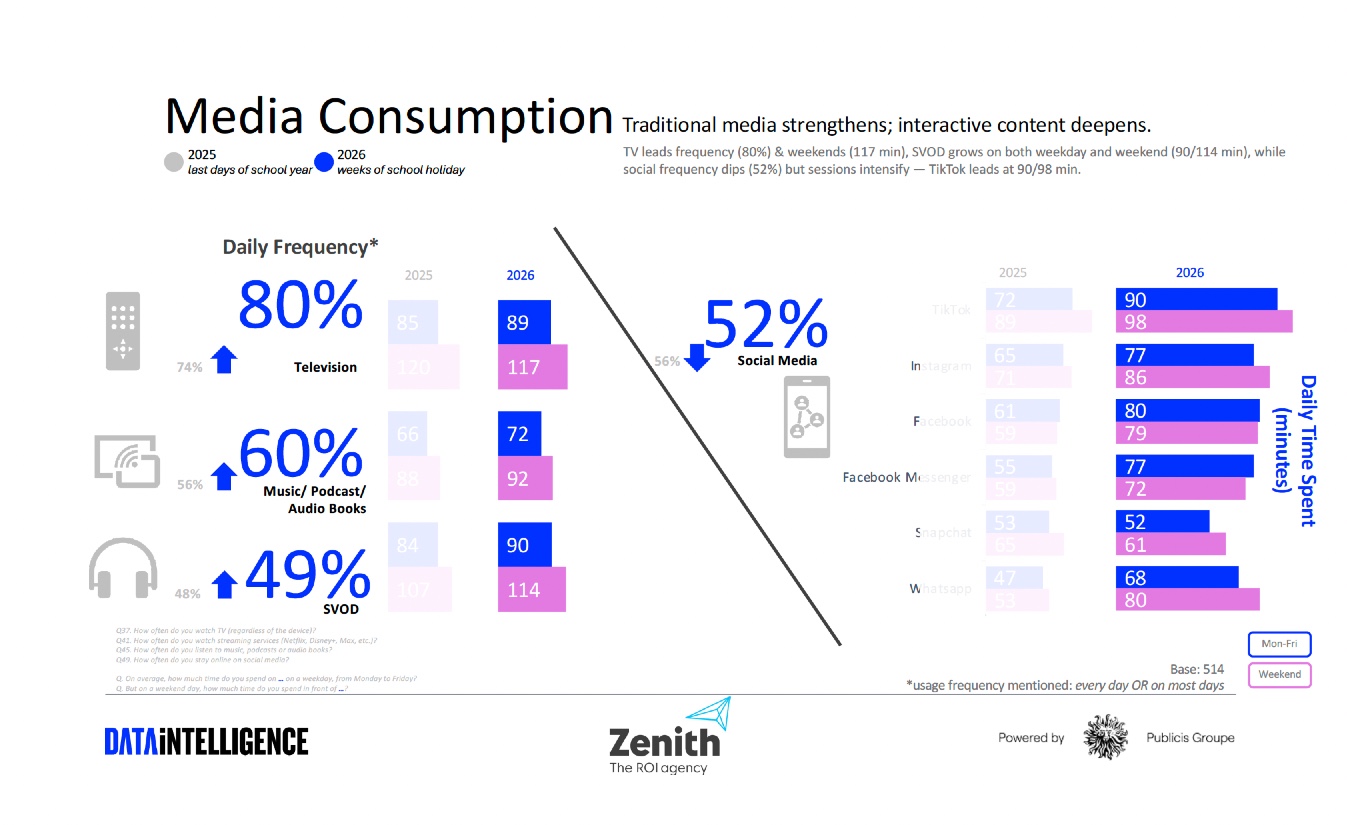
The smartphone remains the anchor of daily media use, strengthening its lead at weekends. But growth is spread across devices: smart TVs, computers and especially gaming consoles all gain traction when school is out. Television still delivers the broadest daily reach, while streaming now matches it in time spent.
Social media is the exception. Fewer kids use it daily, but those who do spend longer on it, with TikTok leading by a wide margin. Tablets are also evolving: ownership and usage frequency are up, yet time spent is down. More kids have them, but they are increasingly used as practical, secondary devices rather than primary screens.
The school supply list is by far the strongest trigger for back-to-school shopping, outranking wardrobe refreshes, the approaching first day of school and seasonal promotions. Research peaks early in the month, while purchasing activity follows a couple of weeks later, clustering around the first day of school and the week that follows.
Almost every family makes back-to-school purchases, but very few make decisions independently. Most categories involve negotiation between parents and children, with only one notable exception where the child’s preference dominates. Two findings stand out:
Parents say quality and durability matter most, ahead of price, school recommendations and even their child’s preferences. Brand, licensed characters and peer influence rank much lower.
In practice, however, price and discounts play a major role. Many parents reuse backpacks, uniforms or blazers if they remain in good condition. Whether driven by sustainability or practicality, value is defined as a product that lasts and comes at the best possible price.
Online, eMAG dominates the start of the shopping journey, serving as the main entry point for most families. Yet as shoppers move into specific categories, they often switch to specialist retailers. The result is a journey shaped by a dominant marketplace at the top of the funnel and a fragmented, expertise-led landscape at the bottom.


The full study covers a lot more ground: devices, media consumption, the influencer landscape, and a detailed breakdown of the shopping journey. If any of this changes how you’re thinking about the season, reach out to contact@dataintelligence.ro for full access.
Methodology
“Kids Habits Study” is a research initiative conducted by Zenith Media Romania, providing valuable data for brands, content creators, publishers, educators, and organizations seeking to understand and engage a generation in formation, one with distinct needs and expectations. The study was carried out through online questionnaire-based interviews (CAWI) with 514 respondents, and fieldwork was conducted between 15th of August- 31st of August, 2026.
All Publicis Groupe Romania proprietary data tools in one place.