Working with AI today: A human perspective on data, change, and impact
23 Apr 2026
 Search


 All Publicis Groupe Romania proprietary data tools in one place.


What happens when we look beyond the tools, the models, and the constant buzz around AI?
In this conversation with Irina Savu, Data & AI Lead at Leo, we explore what working with AI actually reveals about people – how we adapt to change, where we resist it, and what it takes to turn technology into something meaningful. Because in the end, the real transformation is not just about what AI can do, but about how we choose to use it.
As a Data & AI Lead at Leo, one of the most iconic creative agencies in the advertising industry, the role sits at the intersection of data, technology, and creativity.
“I help people make better and faster decisions using data and artificial intelligence. In practice, I turn complex information into things that are easy to understand and useful – whether we’re talking about creative ideas, strategies, or internal processes.
At the same time, I work on creating AI agents, digital colleagues that take over repetitive tasks, so people can focus on what really matters.”
Irina describes the current moment as both unique and energizing:
“I’m very excited about the times we’re living in. It’s an unprecedented period, and I feel that the AI transformation found me at just the right moment – when I’ve accumulated enough experience to think critically and know what to ask from AI, but also still have the energy and curiosity to embrace change and adopt it quickly.”
But alongside excitement comes a very human challenge:
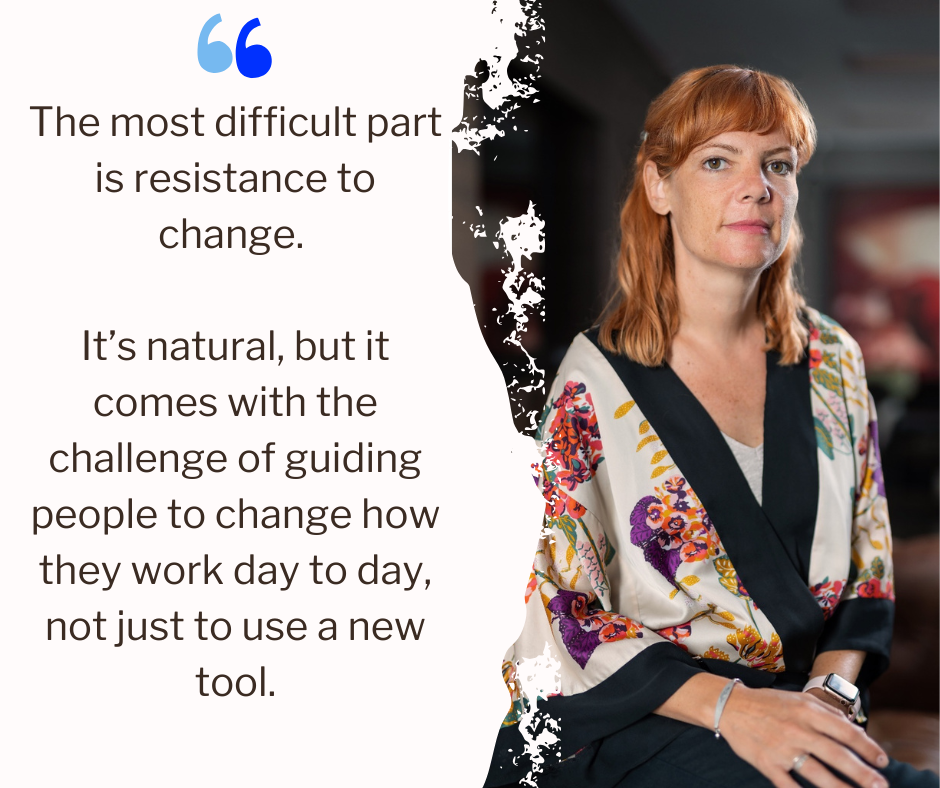
One of the most rewarding moments comes when work scales beyond its initial scope:
“An AI-powered creative solution built by our team in Romania is now being adopted globally by hundreds of people across dozens of countries. It’s incredibly rewarding to realize that what we built is no longer just a project – it’s something that is actually changing how creatives across the entire group work.”
But not everything works as expected, and that’s where the real learning happens:
“I’ve also been part of a project where we built a technically strong solution, but with low adoption. That’s when I learned that it’s not enough to build something good – it matters just as much how you communicate it, how you integrate it into existing processes, and whether people feel they have a role in shaping it.
Since then, we involve users from the very beginning and build with them, not for them.”
Our interaction with data and technology has shifted significantly:
“It has become much more direct and personal. We’re no longer talking about abstract systems in the background, but about something you interact with daily, almost like having a work partner.”
And when it comes to the future: “It’s not AI that will take us somewhere, but rather where we choose to take it. It’s a tool, a very powerful one, but like any tool, its value depends on the intention and responsibility with which we use it.”
For those considering a path in this field, the message is refreshingly simple:
“Stay curious. You don’t need to know everything from the start, it’s a field where we’re all still exploring.
If you enjoy understanding and building things, and have the instinct to challenge and improve things rather than just accept them, that’s enough.”
One of the most common misconceptions is also one of the most persistent:
“That AI will replace people. In reality, it will differentiate them. It’s not a competition between humans and AI, but rather between people who know how to work with it and those who don’t. Those who learn how to use it become faster, think more clearly, and can achieve more with the same effort. The others risk getting stuck in ways of working that no longer keep up.
In the end, AI doesn’t replace people, it amplifies the differences between them.”
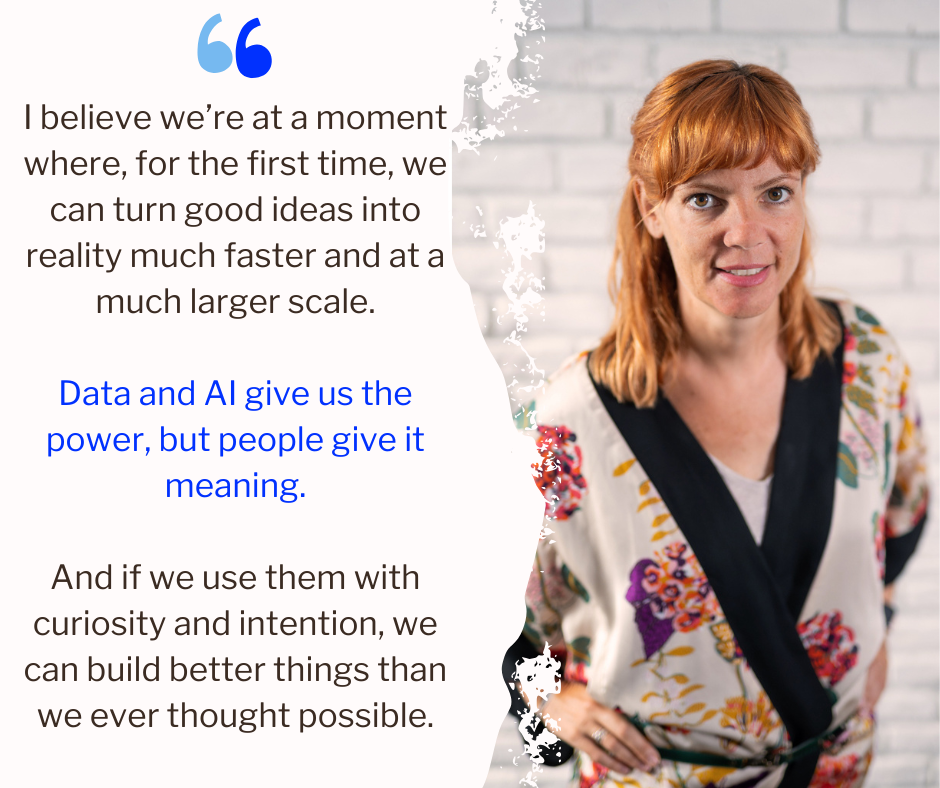
Outside of work, balance comes from stepping away: “I try to slow down and be more present. I enjoy weekends and holidays without my phone, sports, traveling, dancing, and spending time with people close to me.”
Thank you, Irina, and good luck!
All Publicis Groupe Romania proprietary data tools in one place.